Dallas Orthodontics: Your Complete Guide to Braces and Clear Aligners
What Is Orthodontics? A Dallas Patient's Overview
Orthodontics is the dental specialty focused on straightening teeth and correcting how the upper and lower jaws fit together, using braces, clear aligners, and growth-guiding appliances to improve bite function and support healthy breathing for kids, teens, and adults in Dallas. At Ragan Orthodontics, that work is what Dr. Michael Ragan does every single day for Dallas families, from first check to final retainer.
Every dentist studies teeth. Orthodontists go further.
After dental school, an orthodontist completes two to three additional years of full-time residency devoted entirely to tooth movement, jaw growth, and bite correction. That extra training is why general dentists refer complex alignment cases to a specialist. If you're comparing credentials while searching for the best orthodontist in Dallas, that residency is the first thing worth checking.

Issues an orthodontist treats
- Crowding when teeth overlap because there isn't enough room in the arch
- Spacing or gaps between teeth
- Overbite where upper front teeth extend too far past the lower teeth
- Underbite where the lower jaw sits ahead of the upper jaw
- Crossbite where upper and lower teeth bite on the wrong side of each other
- Open bite where front teeth don't touch when the back teeth close
- Narrow arches and airway concerns tied to mouth breathing
Who benefits from orthodontics?
Just about everyone. The American Association of Orthodontists recommends a first orthodontic check by age seven, well before all the permanent teeth arrive. Teens remain the most common age group for braces and clear aligners. Adults? They're a fast-growing part of our family, and healthy teeth and gums matter more than age.
Dr. Ragan has cared for Dallas-area families for over 25 years, offering metal braces, clear braces, clear aligners, hidden braces, and airway-focused care from our Walnut Hill Lane practice in North Dallas. We've got something for every smile, whether you're six years old or sixty.
Orthodontic Treatment Options Available in Dallas
Orthodontics in Dallas has come a long way from one-size-fits-all metal. At Ragan Orthodontics, Dr. Ragan matches the appliance to your bite, your schedule, and your comfort level. Here's what we offer.
1. Clear aligners
Clear aligners straighten your teeth using a series of custom-made, removable trays. Each set is worn about one to two weeks before you move to the next one, applying gentle tension that shifts teeth into position. They're removable for meals and brushing, and they're great at hiding from prying eyes. Best suited for mild to moderate correction with consistent wear.
Invisible braces, visible smiles.
2. Metal braces
Metal braces are a verifiable solution for getting your new smile, and they've got a track record to prove it. Brackets bond to each tooth and connect through an archwire that applies steady pressure. For rotated teeth, deep bites, and complex movement, few options are more versatile.
3. Clear braces
Clear braces offer a less noticeable way to polish up your smile. These use tooth-colored or transparent brackets that blend in with your enamel while working exactly like metal braces. A favorite among teens and working adults who want fixed treatment without the shine.
See-through treatment to see you smile.
4. Brava hidden braces
Brava brackets attach to the back of your teeth instead of the front. Nobody sees the hardware, including you. Dr. Ragan pairs Brava with digital planning to move teeth individually, which makes it a strong pick for adults in professional settings who want zero visible appliances.
5. WildSmiles braces
Stars, hearts, footballs, and flowers. WildSmiles brackets come in fun shapes that give younger kids something to actually look forward to. Same reliable mechanics, more personality.
6. Carriere Motion Appliance
The Carriere Motion Appliance corrects bite alignment early in treatment, before braces or aligners go on. By fixing how the jaws relate first, Dr. Ragan can often shorten the total time in appliances. Kids and teens with overbites or underbites are frequent candidates.
Not sure which one fits? That's what a free consult is for.
Orthodontics for Every Age: Kids, Teens, and Adults
Smile solutions for all ages, because a healthy bite doesn't have an expiration date.
Kids: the age 7 check
According to the American Association of Orthodontists, your child should have an orthodontic screening by age seven. At that point enough permanent teeth have arrived for Dr. Ragan to spot developing crossbites, crowding, or jaw growth concerns.
The earlier Dr. Ragan can diagnose any orthodontic issues, the more time he'll have to better treat your child and set their smile up for success.
Phase 1 treatment may include expanders or partial braces to guide jaw growth, create room for adult teeth, and reduce the chance of extractions later. Phase 2 treatment follows once the permanent teeth are in, usually with full braces or aligners.
Even if Dr. Ragan determines that your child doesn't need Phase 1 treatment, they can still enjoy regular check-ups and stay connected to our practice by joining our free rock n' roam club for kids.
Teens: prime timing
Most teens start treatment as the last permanent teeth erupt, generally between ages 11 and 14. Jaw growth is still active, which makes bite correction more efficient. Teens choose from metal braces, clear braces, and clear aligners, and elastic colors are always a hot topic in the chair.
Adults: no upper limit
Adults make up a steadily growing share of orthodontic patients nationwide, and treatment has no upper age cutoff. The American Association of Orthodontists sets age seven as the starting line for a child's first check, and there's no matching cutoff at the other end. If your teeth and gums are healthy, treatment works at 25, 45, or 65.
A few things Dr. Ragan checks first for adult cases:
- Gum and bone health, since adult bone remodels more slowly
- Existing crowns, bridges, or implants that affect bracket placement
- How visible you want treatment to be, which often points toward clear aligners or Brava
- Airway and breathing patterns that may be tied to arch width
Smiles for your whole family, on one schedule and often in one visit.
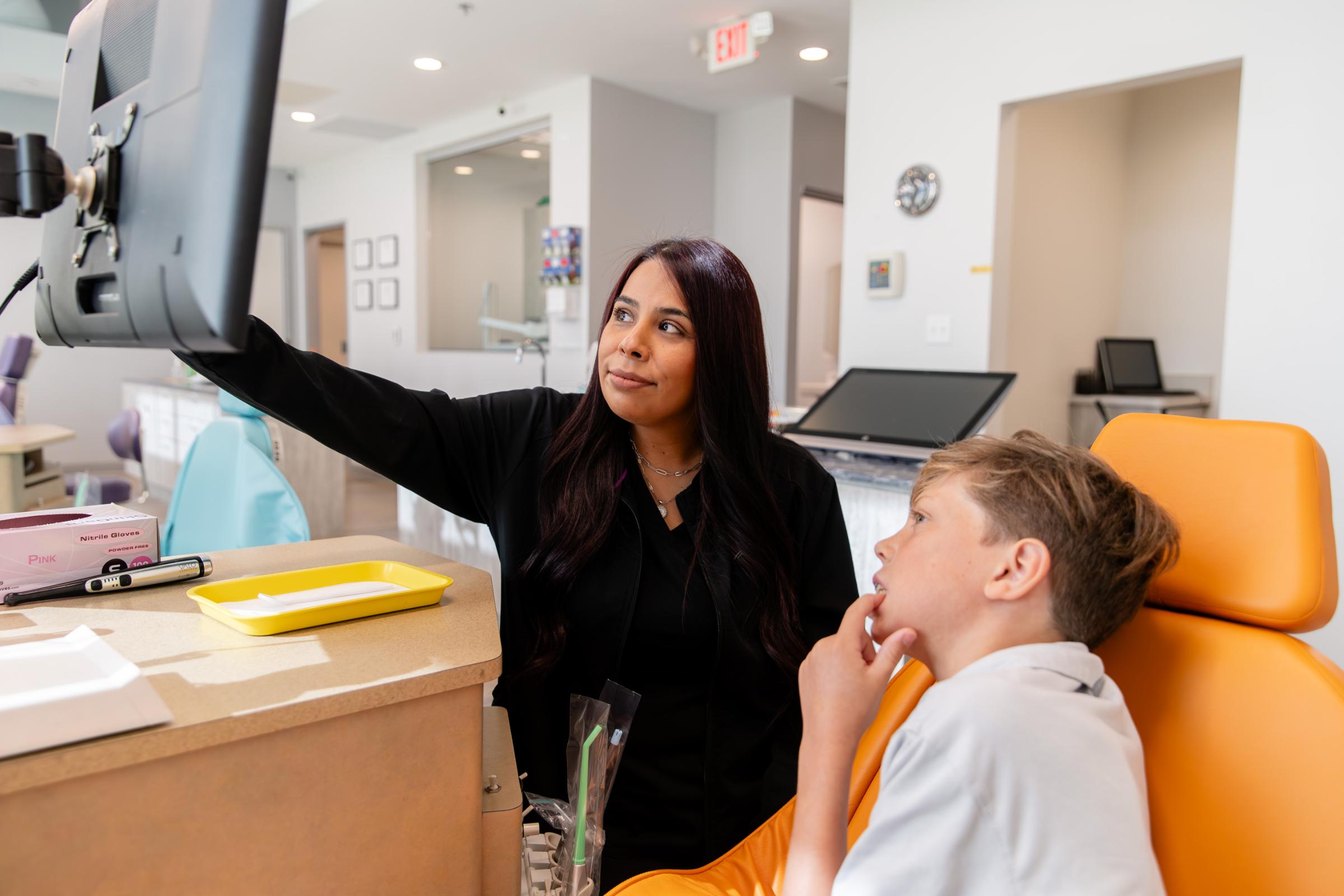
What to Expect: The Dallas Orthodontic Treatment Process
Orthodontic treatment in Dallas follows five steps: a free consult with digital records, a custom plan review, appliance placement, progress visits every six to ten weeks, and retainers after your appliances come off. Most cases run 6 to 12 months for minor corrections and 18 to 30 months for complex bite work.
Step 1: Free consult and records
Dr. Ragan starts with an exam, digital photos, and low-dose X-rays. Our iTero scanner captures goop-free digital pictures of your teeth, so no impression trays and no gagging. CBCT imaging comes into play when Dr. Ragan needs a 3D look at roots, jaws, or airway.
Step 2: Plan review
You'll sit down with Dr. Ragan and see your options side by side. Expected timeline, appliance choices, and what daily life looks like during treatment. No surprises later.
Step 3: Placement visit
Bonding braces or delivering your first aligners generally takes 60 to 90 minutes. It's painless, just a little tedious. We'll walk you through brushing, flossing, foods to skip, and what to do if something feels off.
Soreness for the first few days is normal. That's where the dental pain eraser™ comes in, a drug-free device that helps erase your orthodontic discomfort without reaching for pills.
Step 4: Progress visits and DentalMonitoring
Expect a visit every six to ten weeks for adjustments or new aligner checks. Between visits, the free DentalMonitoring app cuts down your office visits because you'll send pictures and videos of your teeth to Dr. Ragan.
That means you'll spend less time in our office and more time enjoying life.
Step 5: Debond and retainers
When your teeth reach their finish line, we remove brackets or hand over your final aligner, then polish everything up. Retainers follow immediately. Teeth drift for life, so wearing retainers as directed is how you protect your dazzling new smile.
Breathe easy. We'll be checking in.
Advanced Orthodontic Technology at Ragan Orthodontics
We invest in tools that shorten your time in the chair, cut down on trips across town, and keep visits easier on you. Here's what that looks like in practice.
- DentalMonitoring uses AI to read scans you take with your smartphone. Dr. Ragan reviews your progress remotely and only calls you in when something needs hands-on attention. Fewer trips down Walnut Hill Lane in North Dallas, TX 75230, and the same close oversight.
- Airway orthodontics looks past the teeth. Narrow arches, high palates, and chronic mouth breathing can affect sleep quality and daytime focus, especially in kids. Dr. Ragan evaluates arch width and breathing patterns, and works with a referral network of ENTs, allergists, and speech pathologists when a case calls for it.
- Synapse dental pain eraser™ delivers drug-free relief after adjustments. You'll get a painless treatment and peace of mind before your visits.
- iTero digital scanning replaces messy impression material for aligners, retainers, and appliance fabrication. Goop-free digital pictures take minutes and produce a precise 3D model.
- CBCT imaging gives Dr. Ragan a 3D view of roots, bone, and airway structures for planning tougher cases.
- Virtual consult lets you start from your couch. Send photos, get Dr. Ragan's initial read, and decide your next step on your own time. Your information stays protected under HIPAA guidelines.
Treatment you can trust, backed by tools that work around your schedule.

Clear Aligners vs. Braces: Which Is Right for You?
Clear aligners work best for mild to moderate crowding and spacing in patients who will wear them 20 to 22 hours a day. Braces handle complex bites, severe rotations, and cases needing constant force with no compliance required. Both reach excellent finishes. Your bite, habits, and goals decide which fits.
| Feature | Clear Aligners | Braces |
|---|---|---|
| Appearance | Nearly invisible | Visible (clear braces blend better) |
| Removable | Yes, for eating and brushing | No, fixed until debond |
| Treatment time | Often shorter for simple cases | Reliable across all complexity levels |
| Complex cases | Limited without attachments | Handles nearly everything |
| Hygiene | Easy, brush and floss normally | Requires extra care around brackets |
| Compliance | You must wear them consistently | Works around the clock automatically |
Who does well with aligners
Adults and disciplined teens who want discretion, easy cleaning, and no food restrictions. If you'll actually keep the trays in, aligners deliver.
Who does better with braces
Anyone with significant bite correction, rotated teeth, or a habit of misplacing things. Braces don't depend on memory.
Hybrid plans
Sometimes the answer is both. Dr. Ragan may start with a Carriere Motion Appliance to correct the bite, then finish with aligners or braces for detailing. Combining tools often trims total treatment time.
Only an in-person exam confirms candidacy. Photos and online quizzes can't measure root position or bone support, which is why Dr. Ragan reviews records before recommending anything.
Orthodontics in Dallas: Frequently Asked Questions
How long do braces take in Dallas?
Most braces cases run 18 to 24 months, though minor corrections can finish in 6 to 12 months and complex bite work sometimes reaches 30 months. Your timeline depends on how far teeth need to move, your age, and how well you follow instructions on elastics and hygiene. Dr. Ragan gives you an estimated range at your free consult.
At what age should my child see an orthodontist?
By age seven, according to the American Association of Orthodontists. Enough permanent teeth have come in for Dr. Ragan to identify crossbites, crowding, and jaw growth issues early. An early visit doesn't automatically mean early treatment, and many kids simply join our rock n' roam club for kids for periodic check-ins.
Do braces hurt?
Placement itself is painless. You'll feel mild soreness for three to five days afterward as teeth begin moving, and again briefly after adjustments. Soft foods help, and our Synapse dental pain eraser™ offers drug-free relief so you can skip the medicine cabinet.
Can adults get braces?
Absolutely, and there's no upper age limit. Healthy teeth, gums, and supporting bone matter far more than age. Adults often choose clear aligners, clear braces, or Brava hidden braces for discretion. Dr. Ragan coordinates with your general dentist when crowns, implants, or gum treatment are part of the picture.
How do I choose the best orthodontist in Dallas?
Look for a specialist with completed orthodontic residency training, current technology like digital scanning and DentalMonitoring, and consistent patient feedback. Ask whether the practice offers a free consult, how visits are scheduled, and who handles emergencies. Dr. Ragan has been named D Magazine's Top Dentist and earned D Best 2024 recognition, and our practice has served Dallas families for over 25 years.
Orthodontic Resources for Dallas Patients
A few places to learn more, plus care tips worth bookmarking.
- American Association of Orthodontists (aaoinfo.org) publishes patient guides on treatment timing, appliance types, and what specialty training actually involves.
- American Board of Orthodontics (americanboardortho.com) hosts a public lookup so you can verify a provider's certification status.
- Brushing with braces: brush after every meal, angle bristles above and below each bracket, and add a floss threader or water flosser to your routine.
- Aligner wear tracking: aim for 20 to 22 hours daily, keep trays in their case (never a napkin), and rinse them with cool water each time you remove them.
- Retainer hygiene: clean with a soft brush and cool water daily, skip hot water and dishwashers, and bring your retainer to every dental visit.
Handling an orthodontic emergency
- Loose bracket: leave it in place if it's still on the wire and call our practice.
- Poking wire: tuck it down with a pencil eraser and cover it with wax or a soft cotton ball.
- Lost aligner: go back to your previous tray and reach out for direction before skipping ahead.
Quick glossary
Bracket attaches to the tooth. Archwire connects the brackets and supplies the moving force. Elastics are rubber bands that correct bite relationships. Debond means removal day.

Start Your Smile With Ragan Orthodontics
Ready to see what's possible? Dr. Michael Ragan offers a free consult with no obligation, and many families start treatment the same day if they're ready.
Short on time? Our virtual consult gets you Dr. Ragan's initial read from home, HIPAA-protected and quick.
Kids, teens, and adults are all welcome, and our Walnut Hill Lane office in North Dallas is ready to meet you.
Call (214) 363-8893 or book your free consult online at our Walnut Hill Lane location, 7859 Walnut Hill Ln., #345, Dallas, TX 75230.
Making every smile count, and setting the standard for smiles in Dallas.