Early orthodontic treatment, also called Phase 1 treatment, is orthodontic care that starts while a child still has some baby teeth, usually between ages 7 and 10. Its goal is not a finished smile. It corrects problems with jaw growth, bite and space while they are easier to change, so later treatment is simpler or, for some children, not needed at all.
At Ragan Orthodontics, Dr. Michael Ragan sees children at our two Dallas offices, on Walnut Hill Lane and on Inwood Road. He has practiced orthodontics for more than 20 years, and the first visit is a free consultation.

Why Does the Age 7 Orthodontic Visit Matter?
The American Association of Orthodontists recommends that every child have an orthodontic check by age 7. By then the first permanent molars and front teeth are usually coming in, so an orthodontist can see how the bite is forming and whether the jaws have enough room for the teeth still to come.
Most children who come in at 7 do not start treatment right away. The visit tells you two things: whether your child will need orthodontic care, and the best time to begin it. Because the jaws are still growing, some problems are much easier to guide now than to correct after growth slows down.
Signs Your Child May Benefit From an Early Evaluation
You don't need a referral or a problem to book the age 7 visit. These are a few signs worth mentioning when you come in:
- Crowded or overlapping front teeth
- Upper teeth that sit behind the lower teeth (crossbite or underbite)
- Front teeth that stick out and are more likely to chip in a fall
- A thumb or finger habit that continues past the early school years
- Mouth breathing, snoring, or a narrow upper jaw
- Baby teeth that fall out much earlier or later than usual
What Can Phase 1 Treatment Do?
When Dr. Ragan recommends early treatment, it is aimed at a specific problem. Depending on what he finds, Phase 1 can help:
- Widen a narrow upper jaw so the dental arches fit together
- Create space for permanent teeth that have not come in yet
- Correct crossbites, underbites and overbites while the jaws are growing
- Lower the chance of impacted permanent teeth
- Reduce the need to remove permanent teeth later
- Protect protruding front teeth from injury
- Help stop a thumb-sucking habit
Phase 1 is usually shorter than full braces. Afterward, Dr. Ragan keeps an eye on your child while the rest of the permanent teeth come in.

Early Treatment Options at Ragan Orthodontics
Palatal Expanders
A palatal expander gently widens the upper jaw while its growth seam is still open. It is one of the most common Phase 1 tools for crowding and crossbites. Learn more in our guide, What Are Palatal Expanders?
Carriere Motion Appliance
The Carriere Motion appliance helps correct bite problems before braces or aligners, without headgear. It is low-profile and uses elastics to guide the bite into place.
Airway-Focused Evaluation
The shape of the upper jaw also affects the nasal airway. Dr. Ragan looks at jaw development with breathing in mind and works alongside your child's physician when a referral is needed. Read more about airway orthodontics in Dallas.
3D Imaging
When a closer look is needed, our CBCT imaging shows the teeth, jaws and surrounding structures in 3D, which helps with planning and timing.
Phase 1 vs. Phase 2 Orthodontic Treatment
Phase 1 focuses on jaw growth, bite and space while a child still has baby teeth. Phase 2 is braces or aligners once most permanent teeth are in, usually in the pre-teen or teen years, to fine-tune how the teeth line up.
Many children who have Phase 1 still need Phase 2, but the second phase is often simpler because the bigger jaw and bite issues were handled early. Dr. Ragan will tell you up front whether he expects your child to need both.
What If My Child Doesn't Need Treatment Yet?
If Dr. Ragan doesn't see a reason to start, your child can join our free Rock N' Roam Club for Kids. We check in every 6 to 8 months through the DentalMonitoring app, so we can watch how the teeth and jaws develop and step in at the right time if something changes.
Your Child's First Visit
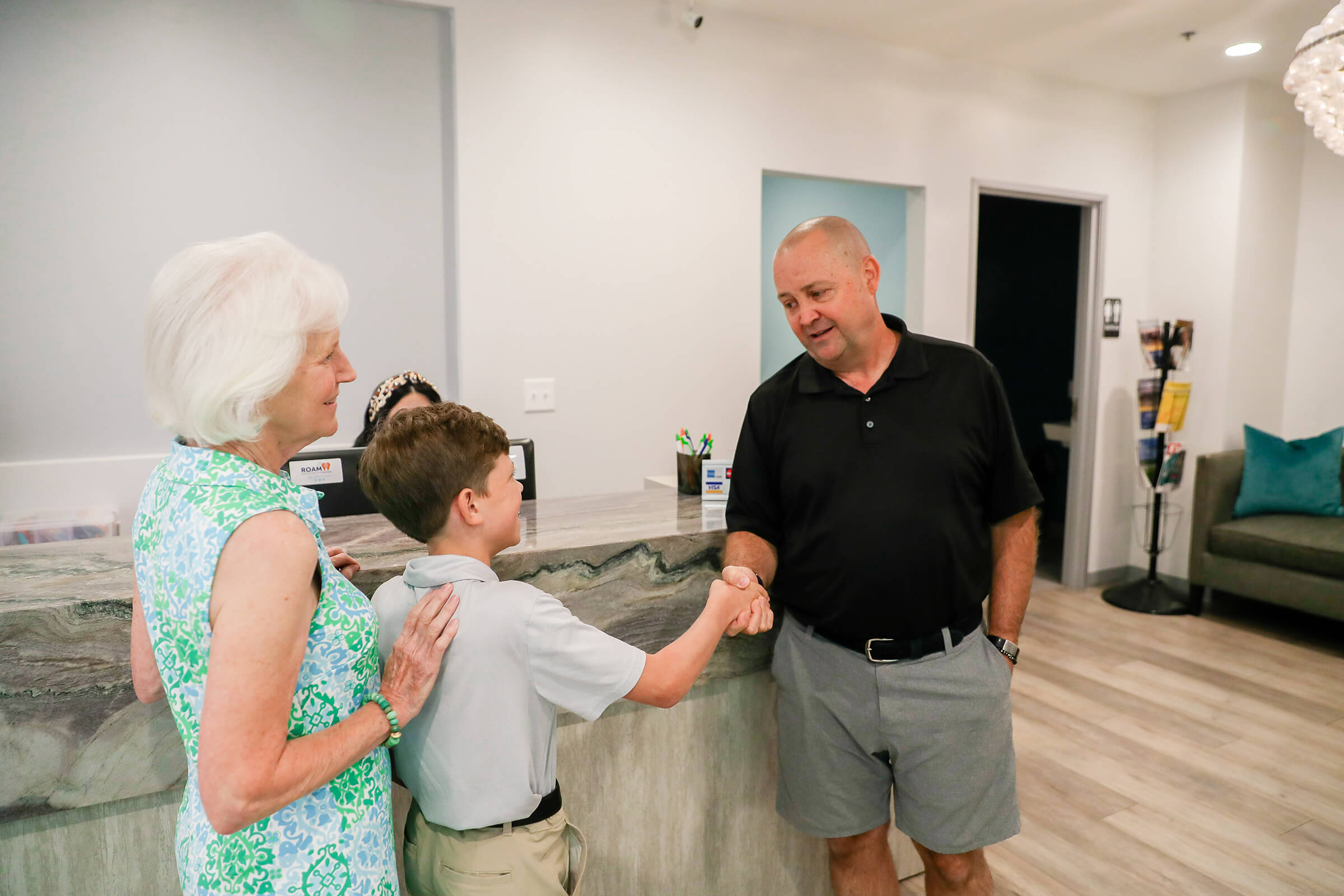
The first visit is a free consultation with Dr. Ragan. He will look at your child's teeth, bite and jaw growth, take any records he needs, and explain what he sees in plain terms. You'll leave knowing whether your child needs treatment now, later, or just regular check-ins.
If treatment is recommended, you'll get the cost before anything starts. We offer interest-free in-house financing, are in network with Aetna, and accept HSA and FSA payments. See financing and insurance for details.
Early Orthodontic Treatment FAQ
How early is too early for orthodontics?
An orthodontic check can happen at any age, and the AAO recommends one by age 7. Treatment itself usually doesn't start until there is a specific problem that is easier to fix while the jaws are growing. For many children, the right answer at 7 is to wait and monitor.
Does every child need Phase 1 treatment?
No. Most children don't need treatment at their first visit. Phase 1 is for specific problems such as crossbites, severe crowding or a narrow upper jaw.
Will my child still need braces after early treatment?
Often, yes. Many children have a shorter, simpler second phase with braces or aligners once their permanent teeth are in. Some need less treatment later, and a few need none.
How much does early orthodontic treatment cost?
Cost depends on the problem and the appliance, so we can't quote a price before the exam. After the free consultation, you'll get a plan with the cost and payment options, including interest-free in-house financing.
How long does Phase 1 treatment take?
It depends on the problem being treated. Phase 1 is typically shorter than full braces, and Dr. Ragan will give you an expected timeline at the consultation.
Schedule Your Child's Free Early Orthodontic Consultation
Not sure if your child needs an evaluation? Come see us. Call our Walnut Hill office at (214) 363-8893 or our Inwood office at (214) 363-8894, or request a free consultation online.